.svg)
Meet the Team: Aaron Pearce - A Category Flight Examiner, Safety Manager and Training and Development Manager at Nelson Aviation College
February 24, 2026
.png)


.png)

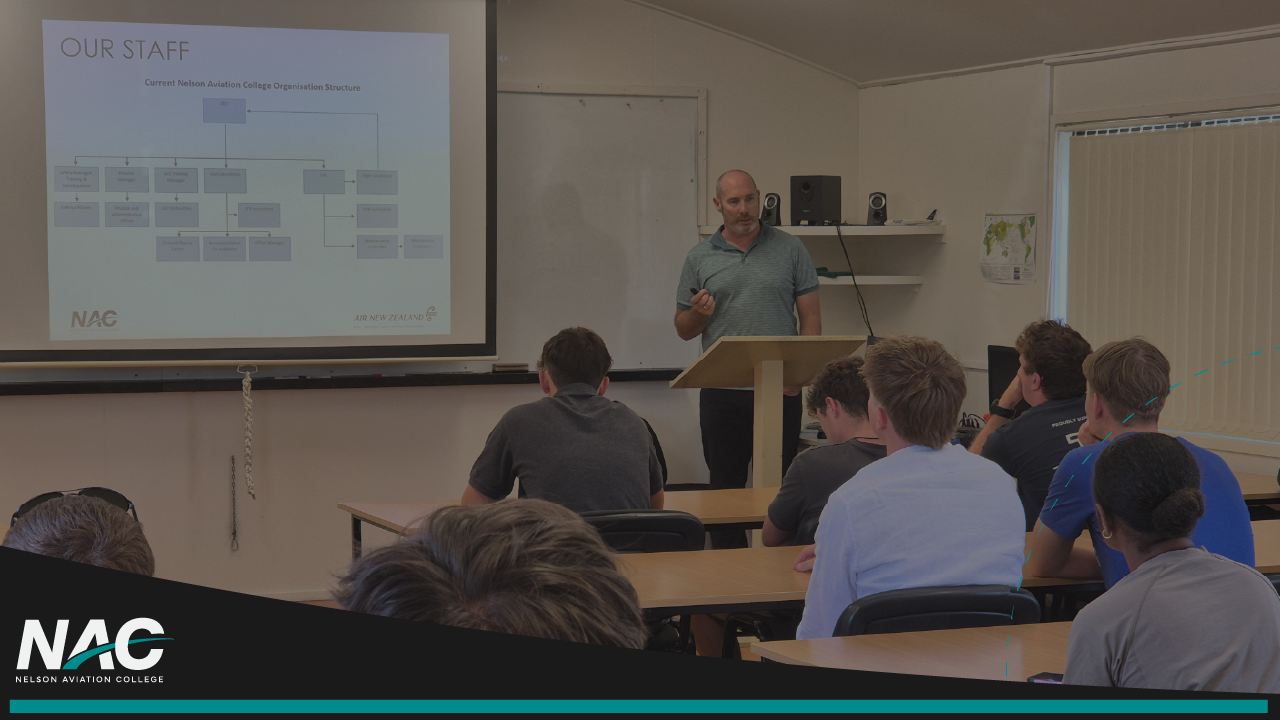
At Nelson Aviation College, the quality of our training is directly tied to the expertise and dedication of our staff. To give you a closer look at the people shaping the next generation of pilots, we sat down with Aaron Pearce, an A Category Flight Examiner who holds two critical roles at the college: Safety Manager and Training and Development Manager.
Aaron Pearce holds the critical roles of Safety Manager and Training and Development Manager at Nelson Aviation College, while also serving as an A Category Flight Examiner. His responsibilities ensure that operational safety and instructional quality remain at the forefront of the student experience.
A Fundamental Safety Culture
At the college, safety is not treated as a mere manual left on a shelf. It is a core operational mindset that is woven into all daily activities. This comprehensive approach covers how occurrences are handled, the thoroughness of reporting, and the maintenance of clear, open communication. Students are immersed in an environment that encourages raising concerns and treats safety as a way of being, preparing them thoroughly for their future careers in aviation.
Rigorous Instructional Standards
To guarantee high-quality flight training, the college places a strong emphasis on continuous instructor development. While the legal minimum for instructor competency checks is once a year, the college exceeds this standard by conducting assessments every four months. This regular monitoring allows for constant upskilling of the instructing team. Additionally, the training syllabus is designed so that students do not solely fly with junior instructors. Every five or six lessons, students complete flights with senior A Category instructors and examiners, ensuring consistent, high-level oversight and guidance throughout their progression.
Preparing for Airline Expectations
When airlines recruit new pilots, they are looking for well-prepared junior aviators rather than individuals who already know how to operate commercial airliners. Recruiters focus heavily on a candidate's personality, their attitude towards safety, and their genuine capability to learn.
Setbacks are a natural part of flight training, and students frequently learn more from their mistakes than their successes. While continuous failures in flight tests or theory are not ideal, the industry highly values continuous improvement. The expectation is that students will process their errors, prepare thoroughly, and demonstrate clear progress on their subsequent attempts.
Taking the First Step
For anyone considering a future in aviation, the most practical approach is simply to begin. Booking a trial flight with an instructor at a local aero club or training facility is the best way to experience the cockpit firsthand. However, prospective students should be advised that the experience of flying is highly addictive.
Watch the Full Interview on YouTube
To hear more of Aaron's insights and to get an inside look at our training environment, watch the full video on NAC's YouTube channel. We regularly post student stories, staff profiles, and flight training advice, so be sure to subscribe to stay up to date with life at Nelson Aviation College.








.svg)


.png)
